
Construction Site Welfare Facilities In NZ: What WorkSafe Expects And What Your Site Actually Needs
A construction site can have the right people, the right programme, and the right gear, but if the welfare setup is poor, the whole site feels harder to run. People notice it quickly. There is nowhere clean to wash up, nowhere dry to sit down, no proper toilet arrangement, and first aid feels like an afterthought.
That is exactly why site welfare matters.
In New Zealand, WorkSafe expects workplaces to provide facilities such as toilets, drinking water, hand-washing facilities, eating and break facilities, and a place for unwell workers to rest where it is unreasonable for them to leave the workplace. Those facilities must be sufficient for the size, location, workforce, and type of work being carried out. WorkSafe also says workplaces must have at least one first aid kit, and workers need to know where it is.
For construction sites, that means welfare is not something to bolt on later. It needs to be part of the setup from the beginning.
Why Welfare Facilities Matter On Real Sites
When the basics are in place, the site is easier to manage. Workers can wash up, eat somewhere clean, use decent toilets, take cover from weather, and deal with minor injuries quickly. When those basics are missing, the site tends to feel disorganised, morale drops, and small issues become regular frustrations.
That is why welfare planning should sit alongside access, storage, and site office planning, rather than being treated as a separate issue at the end.
What WorkSafe Expects
WorkSafe’s workplace and facilities guidance is fairly clear about the core facilities a workplace must provide. These include toilets, drinking water, hand-washing facilities, eating and break facilities, and a place for unwell workers to rest if it is unreasonable for them to leave the workplace. The facilities must suit the workplace size, location, workforce, work type, and hazards. WorkSafe also requires at least one first aid kit for each workplace, and first aid facilities, equipment, and access to first aiders must be appropriate to the work and the risks involved.
On a construction site, that usually translates into five practical questions:
- Where are people going to use the toilet?
- Where can they wash their hands and clean up?
- Where do they sit down for breaks?
- Where do they get out of the weather?
- Where is first aid kept, and who can respond?
If the answer to any of those is vague, the welfare setup is probably not ready.
Toilets: Get Them In Early And Get Them Right
Toilets are the most obvious welfare requirement, but they are also one of the easiest to underthink. A single temporary toilet may be enough for some very small sites, but once numbers increase, access, servicing, cleanliness, and layout become much more important.
For busier sites or longer projects, a proper portable toilet block usually makes far more sense than relying on ad hoc arrangements. Castle Portable Buildings’ toilet block range includes accessible options, single-pan and dual-pan units, urinal combinations, hand basins, vinyl flooring, and electrical compliance, which makes them better suited to structured site use than a bare-minimum setup.
The key point is simple. Toilets need to be clean, practical, and appropriate to the site, not something workers are expected to work around.
Washing Facilities: A Site Needs More Than A Toilet
WorkSafe specifically lists hand-washing facilities as a requirement. That matters on construction sites because workers are often dealing with dust, adhesives, sealants, paints, mud, and general site grime. Toilets without proper washing facilities are not enough.
This is one reason proper ablution and welfare planning makes such a difference. On some sites, hand basins within a toilet block may be enough. On others, particularly messy or remote projects, you may need a broader wash-up arrangement or even dedicated shower facilities depending on the work and duration.
What matters is that workers can clean up properly and that the site does not rely on makeshift or unhygienic alternatives.
Shelter And Break Areas: Somewhere To Sit Matters
WorkSafe expects eating and break facilities to be provided. In practical site terms, that means workers need somewhere suitable to sit down, eat, and step out of the weather. A muddy corner under a temporary lean-to is not a real break space.
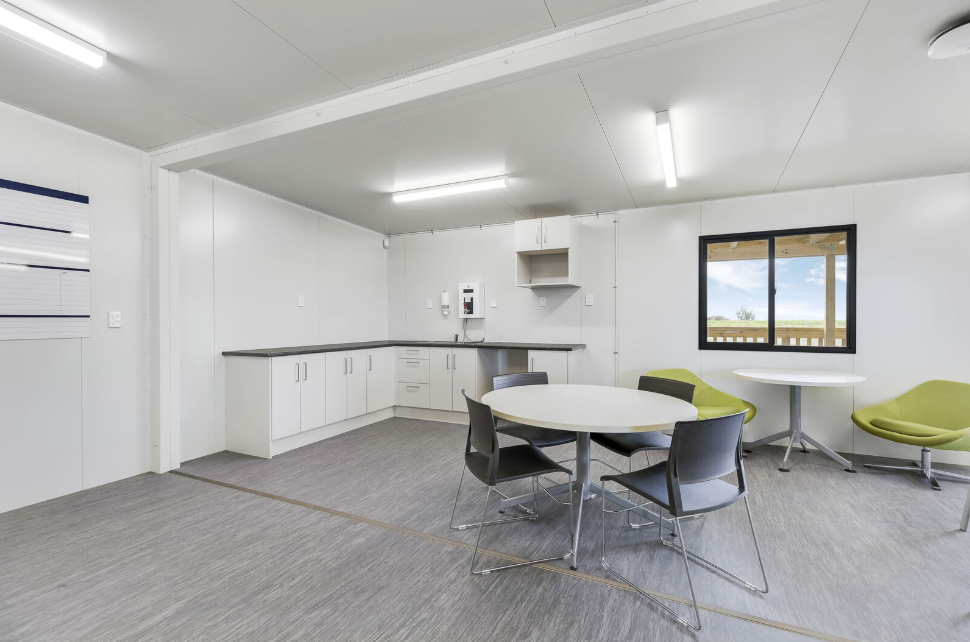
A dedicated portable lunchroom is often one of the best ways to solve this properly. Castle’s lunchroom units are available in multiple crew sizes and are built with galvanised steel chassis, treated plywood flooring, sliding aluminium windows, lights, power points, vinyl flooring, and electrical compliance. That makes them practical for real site use rather than as a token amenity.
Where space is tighter, a combo office and lunchroom unit can work well because it creates both a management space and a break area within one footprint. These units are especially useful on urban construction sites or medium-sized projects where efficiency of layout matters.
Site Offices And Rest Space For Unwell Workers
WorkSafe also says workplaces need a place for unwell workers to rest where it is unreasonable for them to leave the workplace. On many construction sites, that function ends up being handled within a site office or welfare room rather than a separate medical room.
That is one reason a portable site office can do more than admin. Site offices come in a range of sizes and include lockable doors, windows, lighting, power points, vinyl flooring, and electrical compliance, which makes them practical as a clean, enclosed welfare space when needed.
On many jobs, the office becomes the place where site paperwork is handled, visitors are briefed, and a worker can sit down privately if they are unwell or recovering from a minor incident.
First Aid: Small Detail, Big Consequence
First aid is often treated as a simple box-ticking exercise, but WorkSafe’s guidance is broader than that. There must be at least one first aid kit at each workplace, workers need to know where it is, and first aid facilities, equipment, and access to first aiders must be suitable for the nature of the work, location, hazards, and workforce.
On a construction site, that means:
- the first aid kit should be easy to access
- the site team should know where it is
- someone should be able to respond
- the welfare setup should make first aid practical, not difficult
In many cases, the site office becomes the obvious and sensible place for the kit and related records. That keeps things central and easy to communicate.
Welfare Works Best When It Is Planned As A System
The biggest mistake on many sites is treating welfare as separate bits and pieces. A toilet here, a break area there, and an office squeezed in later. That usually creates a clumsy setup.
The better approach is to treat welfare as one system:
- toilets and hand-washing
- lunchroom and shelter
- office and first aid point
- practical layout between them
That is also why our published blog on Portable Site Office Guide NZ: Hire Vs Buy, Sizes And Setup Tips is a useful related read. While it looks broadly at portable building decisions, it reinforces the value of planning the whole site setup early rather than solving one piece at a time.
A Better Site Starts With Better Welfare
Construction site welfare facilities are not there to make the site look tidy. They are there because workers need practical, clean, functioning spaces to use every day. WorkSafe’s expectations are clear on the basics, and good projects usually go a step further by making those basics easy to access and easy to maintain.
If you are planning a new site or upgrading an existing one, it makes sense to think about toilets, washing, shelter, first aid, and office space as one joined-up setup. That is usually where portable buildings prove their value. They help you get essential facilities on site quickly and in a layout that actually supports the way the project runs.
If the site welfare plan still feels piecemeal, it is worth sorting it now rather than after the crew has already started feeling the gaps.