How Portable Buildings Save Time On NZ Projects
Time pressure shows up on almost every project in New Zealand. It does not matter whether it is a construction site, a rural operation, an infrastructure job, a temporary event space, or a growing business that needs room quickly. Once the need for extra space appears, people usually want the same thing. They want it sorted fast, without creating a bigger problem somewhere else.
That is one of the strongest reasons portable buildings continue to make sense.
Portable buildings save time in ways that are easy to underestimate. It is not only about faster delivery. It is also about reducing delays in planning, simplifying setup, cutting down disruption, and getting useful space into service sooner.
For teams working to deadlines, that speed can make a real difference.
Why Time Matters So Much On Projects
Lost time rarely stays isolated. When one part of a project is delayed, it tends to affect other parts too. If staff facilities are not ready, the site setup feels incomplete. If the office is missing, admin becomes messy. If lunchroom or toilet facilities are delayed, the site becomes harder to run well. If a growing business cannot create extra room quickly, productivity often gets squeezed.
That is why portable buildings are often chosen for practical reasons before anything else. They help get essential space in place quickly so everything around that space can run better.
Faster Than Starting From Scratch
A traditional build has its place, but it can also be slow. There are more moving parts, more on-site construction time, and usually more disruption while it all comes together.
Portable buildings streamline that process. Because the building is designed and prepared as a portable solution from the outset, the timeline to having a usable space can be much shorter.
That matters when the need is immediate, such as:
- a new site office for a project that is already starting
- welfare facilities for a live worksite
- temporary admin space during expansion
- extra internal workspace for a commercial or industrial site
- event infrastructure on a defined schedule
In all of those cases, time saved at the front end has flow-on benefits for the rest of the project.
Faster Site Establishment
One of the clearest examples is site establishment.
Projects usually need the basics in place before work can run smoothly. That often includes:
- an office
- a lunch area
- toilets
- sometimes changing or support facilities
Using portable buildings means those spaces can be brought in as a coordinated setup rather than built piece by piece from scratch.
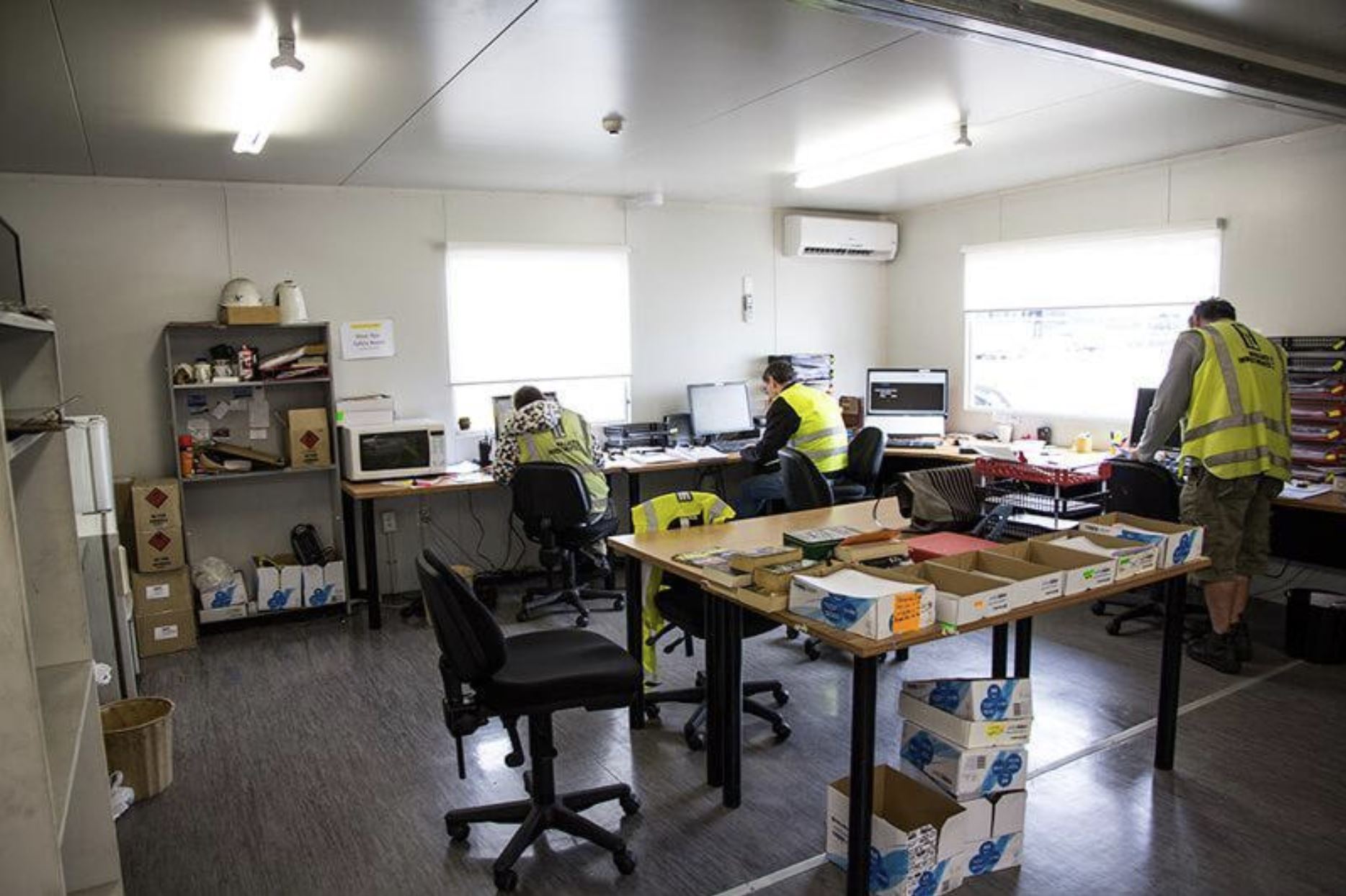
A portable site office gives supervisors and project leads somewhere to work. A portable toilet block supports site welfare. A portable lunchroom gives the crew a practical place to step away from the work area.
The faster those pieces are in place, the faster the site starts to feel organised and fully operational.
Less Disruption During Setup
Saving time is not only about speed to delivery. It is also about avoiding unnecessary disruption once the building arrives.
A portable solution can reduce the amount of site activity tied up in creating a usable room or facility. That means fewer moving parts, less clutter, and less overlap with the day-to-day operation of the site or business.
This can be especially useful when:
- the site is already active
- access is restricted
- work needs to continue while the new space is introduced
- the team cannot afford drawn-out internal building works
For growing businesses, this point often matters just as much as the build speed itself.
Faster Decision-Making Around Hire Vs Buy
Portable buildings also save time by making decision-making easier.
For many projects, the choice is not between a portable building and a permanent building. It is between solving the space problem now or spending too long trying to decide what the perfect long-term answer might be.
Portable solutions give businesses a practical middle ground. You can hire when the need is temporary, or buy when the need is ongoing. That flexibility helps move projects forward instead of stalling over indecision.
If that is a question you are working through, our insights on buying or renting portable buildings in NZ is a useful starting point.
Time Saved Across Different Types Of NZ Projects
Construction And Civil Projects
These jobs often need fast setup because the programme is already live. Portable buildings help get welfare and admin spaces in place early, which supports a smoother site from the beginning.
Rural And Regional Work
On remote or regional projects, getting a usable space established quickly matters even more. Portable buildings offer a straightforward way to bring facilities to sites where permanent construction would take longer or make less sense.
Commercial Growth
When a business grows faster than expected, there is often no time to wait for a long traditional build process. A portable building can relieve that pressure by creating usable room quickly while the wider business keeps moving.
Temporary Or Seasonal Operations
Some projects only need the space for a defined period. Portable buildings save time because they let you bring in the facility you need without overbuilding for a short-term requirement.
The Flow-On Effect Of Faster Space
The real value is often in what happens after the building is in place.
A faster office means faster coordination.
A faster lunchroom means better staff welfare from day one.
A faster toilet setup means fewer site headaches.
A faster internal room means less strain on the rest of the building.
Where Tailored Portable Solutions Save Even More Time
Sometimes the fastest option is not a standard standalone building. It is a layout that combines functions in one smarter unit.
A combo office and lunchroom unit is a good example. Instead of planning and positioning two separate buildings, you can create a split-use setup that saves space and simplifies the site.
On other jobs, a tailored design may be the better route because the way the building is used is very specific. When the design fits the operational need properly from the beginning, it usually saves time later by reducing changes, workarounds, and site inefficiencies.
If Time Matters, Talk To Us Early
If your project needs space fast, it is worth having the conversation early. The earlier the need is identified, the easier it is to recommend a portable solution that fits the site properly and avoids slow decisions later.
Portable buildings save time because they solve real problems quickly. On a busy project, that can be exactly what keeps everything moving.