
Keeping Crews Comfortable Through A NZ Summer: Shade, Water And Break Spaces
Winter gets all the attention when people plan site welfare. Wet gear, mud, somewhere to dry out between downpours. Summer arrives with less warning and causes just as many problems, because a crew working through 28 degrees with nowhere cool to sit will slow down after lunch whether anyone says so or not.
We deliver a lot of buildings in October and November, and the conversations we have then are different to the ones we have in May.
Why Summer Is Harder On Site Welfare Than Winter
In winter the problem is obvious and people plan for it. In summer the failures are quieter. Crews take shorter breaks because the break space is hotter than the shade behind a stack of timber. Water bottles sit in a ute in full sun. Nobody complains until someone goes down with heat exhaustion and the paperwork starts.
The fix is rarely expensive. It is mostly about deciding these things before the temperature makes the decision for you.
Insulation Is The Part Nobody Notices
A steel box sitting in direct sun with no insulation and no ventilation becomes unusable by early afternoon. We build our portable lunchrooms insulated as standard, which is the single biggest difference between a break space people use and one they avoid.
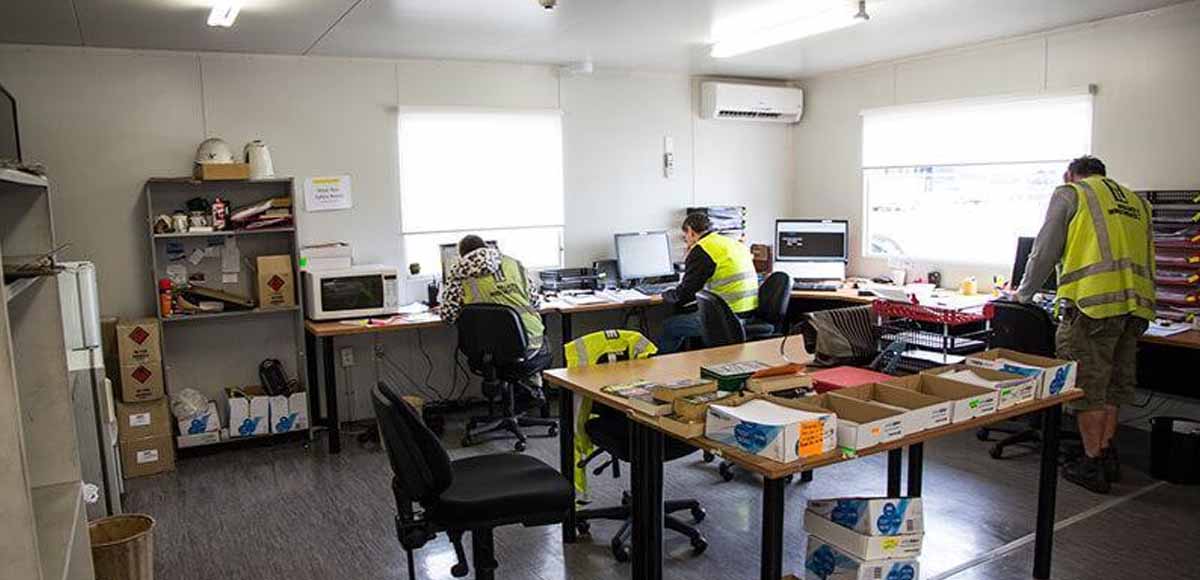
If you are running an office container instead, we can fit it out with insulation and climate control rather than leaving it as bare steel. Worth sorting at the quote stage, because retrofitting once the unit is on site is a much clumsier job.
Where Your Crew Goes At Smoko
Watch a hot site at morning tea and you learn a lot. If the lunchroom is a long walk away, or it is stuffy, people will sit on the tailgate of a truck under whatever shade they can find. That is a welfare problem and a supervision problem at the same time, because the crew is now spread across the site instead of together in one place.
Put the break space close enough that using it is easier than not using it. Then give people a reason to be in there: seating that fits everyone at once, a kettle, somewhere to put a chilly bin.
Heat Pumps And Air Con: When They Earn Their Cost
Insulation gets you a long way. Air conditioning is what turns a survivable room into a genuinely cool one, and it is an option on our lunchrooms and combo office and lunchroom units rather than something fitted by default.
We usually suggest it when the building holds a decent number of people at once, when the site has no natural shade, or when the job runs right through January and February. A 24 or 36 crew lunchroom full of people at midday generates plenty of its own heat before the sun gets involved.
Keeping Water Close To The Work
Drinking water is the easiest thing to get wrong. If the only supply sits at the site entrance and the work face is 200 metres away up a slope, people will ration their own trips rather than walk it in the heat.
Plan a shaded point near the work itself, and expect to move it as the job progresses. This is one of those details that sounds trivial written down and matters enormously at two in the afternoon.
Washing Off At The End Of A Hot Shift
Summer work means sweat, dust and sunscreen, which is a different mess to winter mud but no more pleasant to drive home in. Our portable shower blocks come with gas califont or electric cylinder hot water, though the useful part in summer is that a shower exists at all.
Crews on accommodation sites or long remote jobs feel this most. So do trades dealing with fibreglass, insulation or chemical products, where washing off before travelling is a health matter rather than a comfort one.
Size For The Hottest Week, Not The Average One
Our lunchrooms are rated by crew: 6, 12, 18, 24 and 36 people. In winter a slightly tight room feels cosy. In summer it feels like a sauna, and people leave.
If your crew number moves around, size to the peak rather than the average. The same logic applies to shade and seating outside the building, which costs almost nothing to add and takes the pressure off the room itself.
Sorting Summer Welfare Before It Gets Hot
Most of this is straightforward once someone has made the call: insulated break space, close enough to be used, cool enough to sit in, water near the work, and somewhere to wash off at the end. The wider picture of construction site welfare facilities is worth working through at the same time, since the summer version is the same setup with the heat turned up.
Tell us your crew numbers, how long the job runs and how much shade the site has, and we will put together a setup that holds up through the worst week of the summer rather than the mild ones either side of it.