
Waste Tanks For Portable Toilets: Sizing And Servicing Your Site
Most site managers order a toilet block and stop thinking about it there. The tank underneath gets far less attention than the pans and cubicles above it, right up until it fills faster than expected and someone has to arrange an urgent pump-out mid-project.
The tank is doing the actual work of the whole unit, so it is worth getting right from the start.
Why The Tank Matters As Much As The Block
A portable toilet block is only as good as the waste system underneath it. Undersize the tank and you are paying for extra call-outs. Oversize it for a small crew and you are hiring more capacity than the site needs. Getting the size right at the start avoids both problems.
4000L Or 6000L: What The Difference Means On Site
We supply waste tanks in two sizes, 4000L and 6000L. A 4000L tank generally suits a smaller crew or a shorter project, where daily use stays fairly predictable. A 6000L tank gives you more runway between services, which matters most on sites with larger crews, longer shifts, or locations where a pump-out truck cannot get back on short notice. If your site is remote or access is limited to certain days of the week, sizing up to the 6000L tank is usually the safer call, even if the crew number alone would suggest the smaller option.
What The Tanks Are Built To Handle
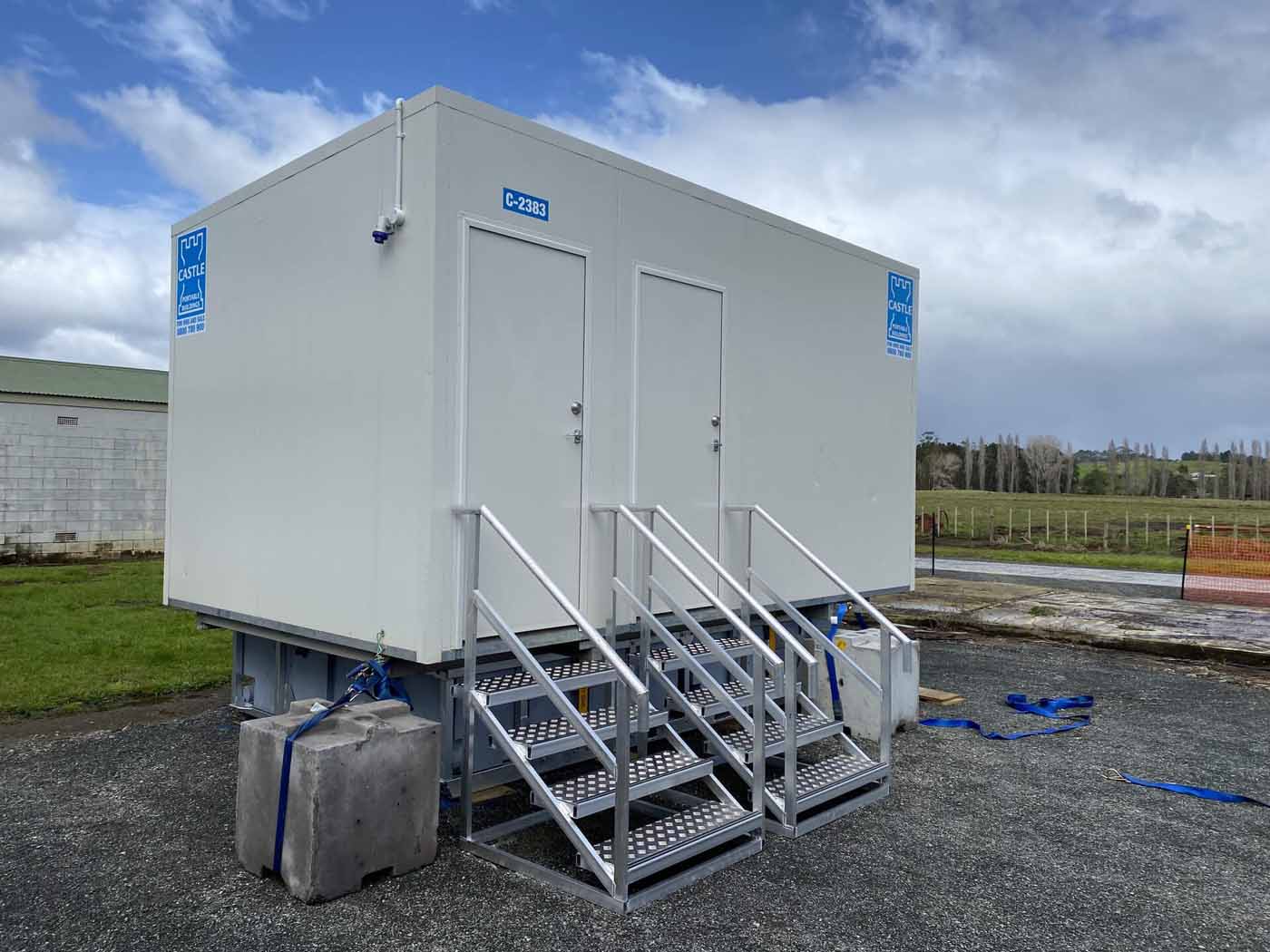
These are not lightweight fittings. Our tanks use a heavy-duty steel frame with gusset reinforcing, paired with a long-life polyethylene tank that will not rust or corrode over time on site. Locator tabs and lift points make positioning and servicing straightforward, and a steel tow hook is built in for relocation. The frame and tank combination is certified to withstand 7000kg plus 12 people standing on it, under engineer certificate E3577, and is suited to ablution blocks up to 6m x 2.4m, which covers our full toilet block range.
How Crew Size And Site Duration Affect Servicing
Servicing frequency comes down to two things: how many people are using the facilities, and how long the tank sits between pump-outs. A crew of six on a short job might only need one service across the whole project. A crew of forty running two shifts will need a regular schedule built in from day one, not arranged reactively once someone notices the tank is full. When you hire through us, we can set up a servicing schedule that matches your crew numbers rather than leaving it to guesswork.
Grey Water Is A Separate Question
Toilets are not the only source of wastewater on a site with amenities. Our portable shower blocks produce grey water, which needs its own drainage or storage tank, separate from sewage. If you are planning toilets and showers together, work out grey water handling at the same time as the toilet tank sizing, rather than treating it as an afterthought once the showers are already in place.
Getting Truck Access Right
A tank sized correctly still causes headaches if the pump-out truck cannot reach it. Before the toilet block goes in, walk the site and check that a service vehicle can get within hose range of the tank without crossing active work areas, parked plant, or ground that turns to mud after rain. Positioning the block near a site entrance or a formed access road, rather than tucked behind other facilities, saves a lot of frustration on service day.
Short Hires And Events Need The Same Thinking
Waste tank sizing is not only a construction site question. Events, festivals and short-term hires often bring a sharp spike in toilet use over a single weekend, which is a very different load pattern to a steady construction crew. A tank that would comfortably last a small site for weeks can fill in a day under event conditions. If you are hiring for an event, tell us expected attendee numbers and the hours facilities will be in use, and we will size and, if needed, service the tank around that rather than a standard weekly schedule.
Hiring With Servicing Included
One advantage of hiring rather than buying is that servicing and waste removal come as part of the arrangement. We manage the pump-out schedule so your site team does not have to chase it up separately, which matters on longer projects where facilities management can easily slide down the priority list once the job gets busy.
Planning Ahead Saves You A Problem Later
Waste tank sizing is one of those decisions that looks minor on paper and becomes a real problem in practice if it is rushed. Tell us your crew numbers, shift pattern and how easily a service truck can reach the site, and we will match the tank size and servicing schedule to the job rather than leaving you to work it out once the block is already installed. If you are still deciding on the block itself, our guide to construction site welfare facilities is a good place to start before you get to the tank.